This year’s UN Global Compact Leaders Summit placed a clear emphasis on moving sustainability commitments toward measurable outcomes. For the energy sector, this puts greater focus on whether the infrastructure needed for electrification and decarbonization can deliver in practice.
The United Nations Global Compact concluded its 2026 Leaders Summit in New York on September 23, bringing together more than 750 business leaders, investors, policymakers, UN representatives, and sustainability experts during the week of the United Nations General Assembly.
Under the theme “Driving Sustainable Growth and Resilience,” discussions focused on integrating sustainability into business strategy, investment decisions, operations, governance, and supply chains, while strengthening long-term business resilience.
A central message from the Summit was that businesses should not retreat into short-term thinking as economic and geopolitical pressures increase. Instead, the UN Global Compact called for sustainability to be embedded more directly into investment, operations, risk management, and long-term strategy. The Summit also emphasized that company-level action alone cannot overcome wider policy, market, and financing barriers. To address these challenges, the UN Global Compact announced plans to expand collaborative action in 2027 across climate, living wages, gender equality, and sustainable finance.
This direction reflects the UN Global Compact’s wider 2026–2030 Strategy, a five-year plan designed to help companies turn sustainability goals into measurable results and drive systemic change. Grounded in the Ten Principles and aligned with the 2030 Agenda for Sustainable Development, the strategy responds to growing climate, social, and geopolitical pressures that increasingly require coordinated action across business, governments, and other stakeholders.
As renewable generation, electric vehicles, heat pumps, and energy storage scale, electricity networks must accommodate more variable generation and new demand while making better use of existing capacity. Managing these changes requires a clearer understanding of conditions across increasingly dynamic networks.
This challenge also reflects the Summit’s emphasis on sustainable growth and resilience. A lower-carbon energy system must integrate new technologies while remaining reliable and adaptable as demand and generation patterns change.
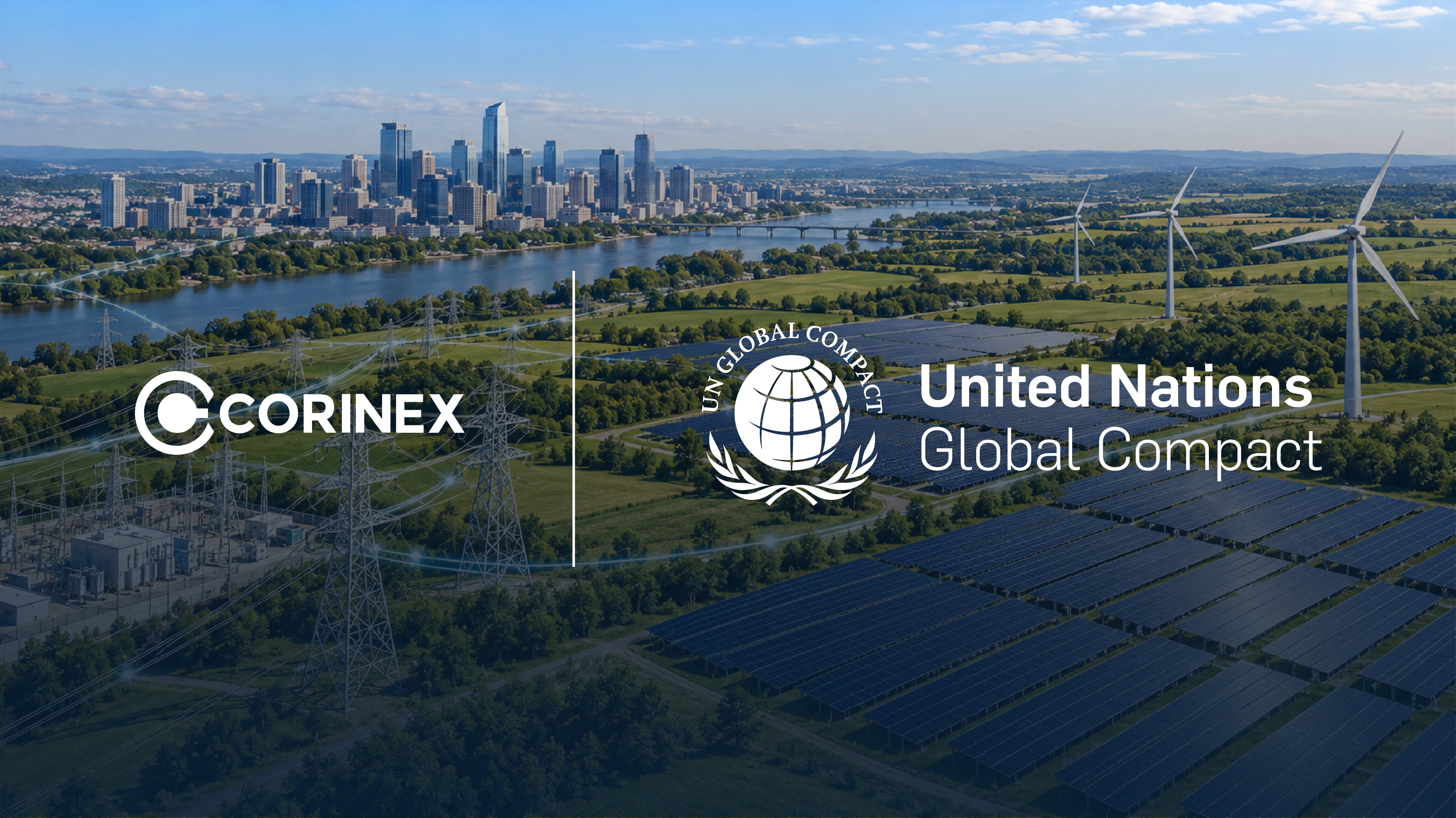
Corinex directly addresses these requirements through its approach to grid digitalization. By using existing powerlines as a broadband communications foundation, Corinex enables utilities to connect distributed assets, gain greater visibility into low-voltage grid conditions, and make more informed operational and investment decisions. Together, these capabilities help utilities identify where capacity remains, respond more effectively to emerging constraints, and strengthen grid resilience as electrification grows.
As a participant in the United Nations Global Compact, Corinex has committed to aligning its operations and strategies with the Ten Principles covering human rights, labour, environment, and anti-corruption. This place sits work in grid digitalization within a broader commitment to responsible business as electricity systems adapt to the demands of decarbonization.
For the energy transition, measurable progress depends on the infrastructure and capabilities needed to support it. Corinex provides the connectivity, visibility, and intelligence utilities need to build a more resilient and efficient grid.
Derechos de autor © 2026 Corinex Corp. Todos los derechos reservados.