Canada’s Grid Challenge Is Moving Closer to Home

Canada’s electricity system is entering a major period of expansion, but new generation and transmission alone will not determine how effectively the country can electrify. Electric vehicles, heat pumps, and other household technologies are concentrating new demand on local distribution networks, while reliability pressures and limited grid visibility make emerging constraints harder to manage. As utilities prepare for rising electricity demand, improving the visibility, flexibility, and utilization of existing distribution infrastructure is becoming just as important as building new capacity.

August 7, 2026
Colin Tang, with editorial support from Jaden Elbanna
6 Mins Read

In Toronto’s west end, the electrification of a 115-year-old home shows how Canada’s grid challenge is taking shape on the local distribution networks serving Canadian households.

The homeowners wanted lower energy bills and less dependence on natural gas. They installed heat pumps and rooftop solar, then converted their water heating, cooking and laundry systems to electricity. But the most revealing part of the retrofit was less visible: the home’s 100-amp electrical panel had to be replaced with a 200-amp panel.

That upgrade points to a broader constraint. As households electrify, new loads can cluster in the same neighborhoods and peak on the same schedule, straining distribution transformers and feeders even when capacity remains available elsewhere on the grid. This concentration of demand risks turning local distribution networks into a bottleneck in Canada’s energy transition.

These neighborhood-level pressures are intensifying just as Canada begins charting the future of its electricity system. On May 14, 2026, the federal government announced plans for a forthcoming National Electricity Strategy, with electricity demand expected to double by 2050. The strategy calls for more generation, stronger transmission connections, and broader grid modernization.

At the distribution level, where household electrification is reshaping demand, grid modernization is essential to helping utilities identify local constraints, make better use of existing capacity, and address emerging pressures before they affect reliability.

Canadian Households’ Shift Toward Electrification

Canada’s electricity prices are among the lowest in advanced economies, providing a strong economic foundation for broader electrification (Graph 1).

Graph 1: Average electrical rates for various countries

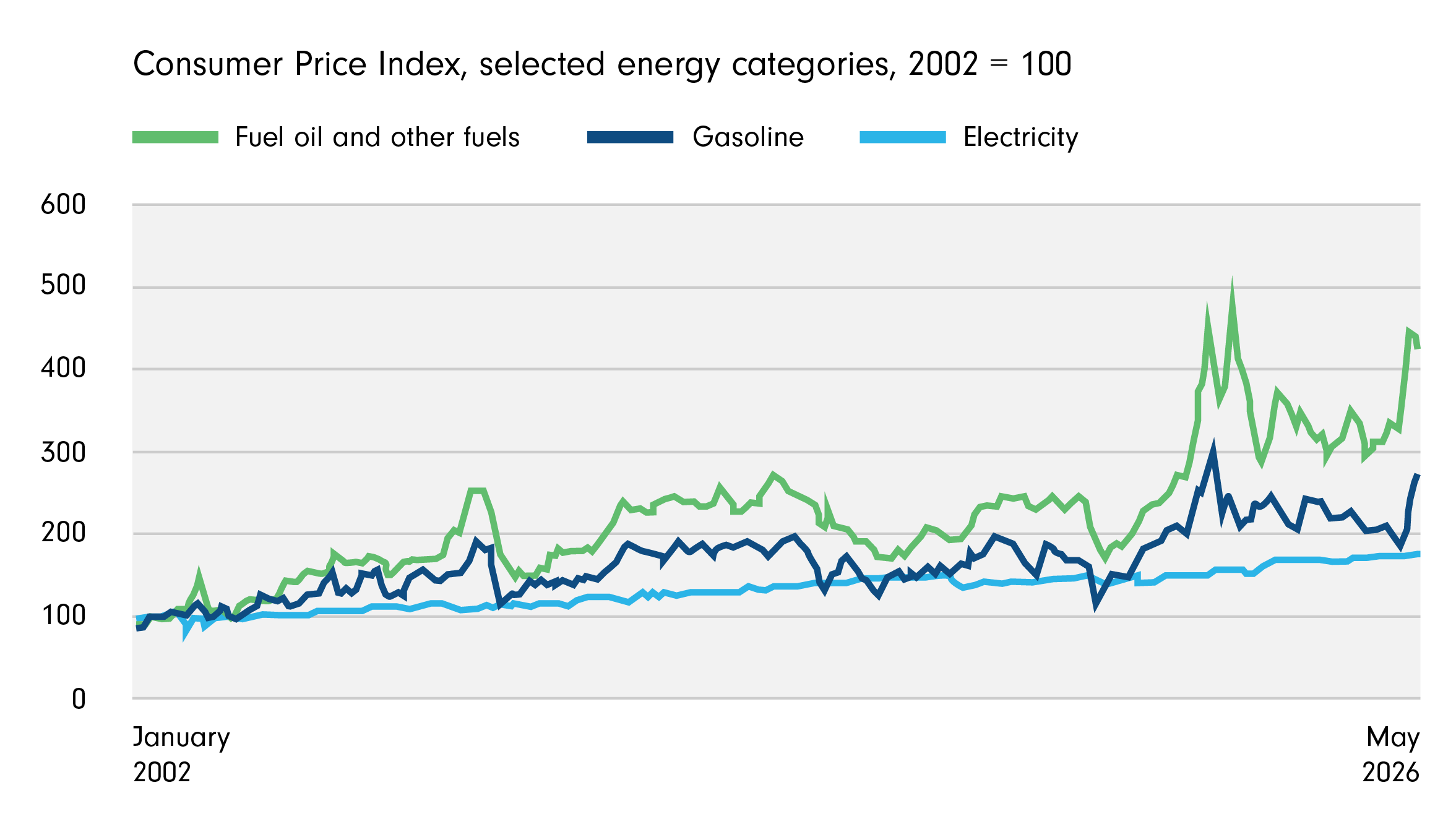
That advantage has proven beneficial as geopolitical disruptions expose households to sharp swings in fossil fuel prices. Over the past decade, gasoline prices were more than three times more volatile than electricity prices, while furnace oil prices were more than six times more volatile (Graph 2).

Graph 2: Canadian electricity prices have been more stable than gasoline and fuel oil

Source: Statistics Canada

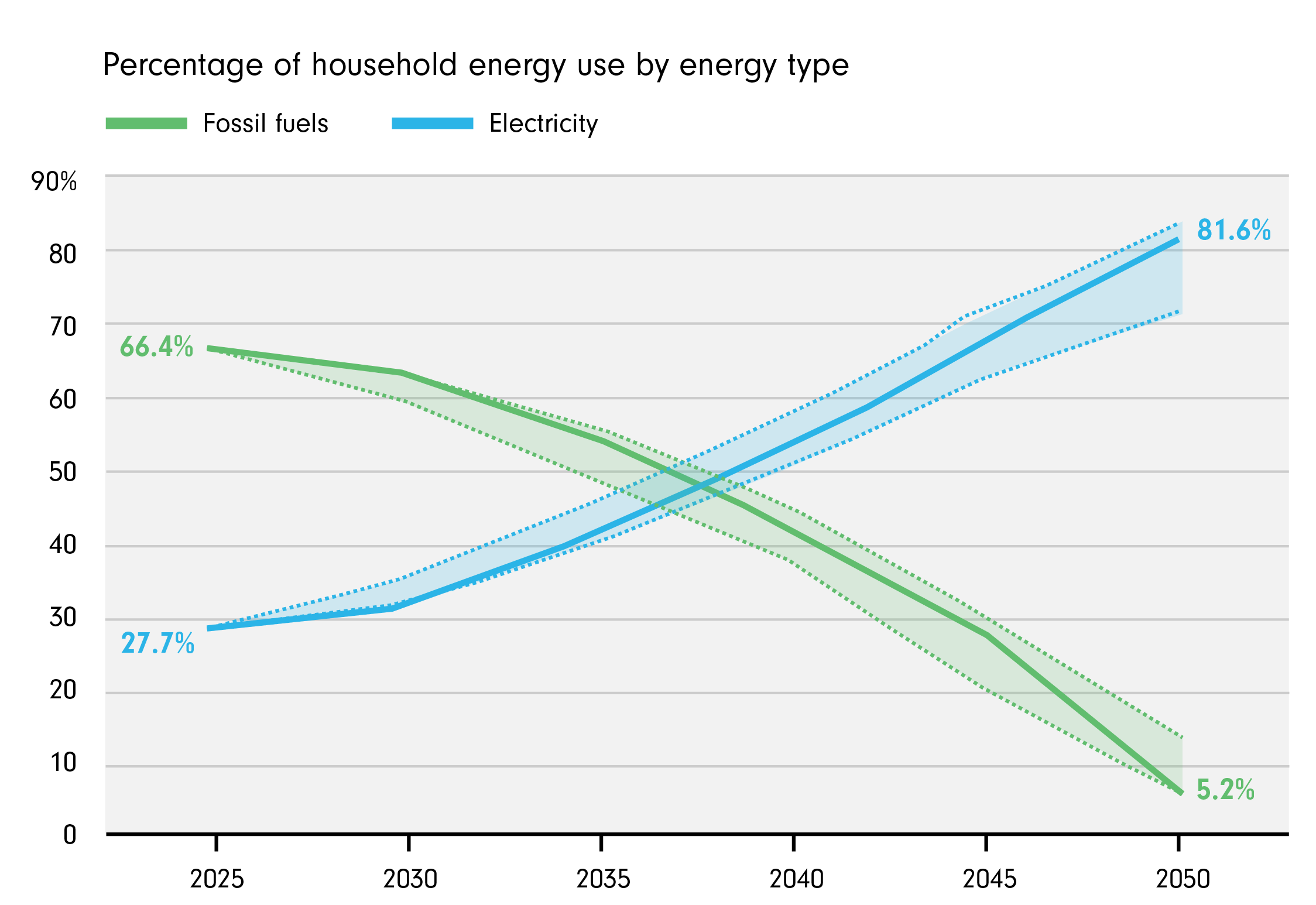
That combination of affordability and stability matters because fossil fuels still supply two-thirds of Canadian household and passenger vehicle energy demand. However, that dependence is beginning to ease. Improving economics, government incentives, and technological advances are making electric alternatives increasingly attractive, gradually reducing fossil fuels’ share of household energy consumption (Graph 3).

Graph 3: Electricity overtakes fossil fuels in all net zero scenarios

Source: Climate Institute

Note: 
The blue and green lines represent a midrange scenario that assumes a slower trajectory to net zero and a midrange set of assumptions for key drivers of global uncertainty, including fossil-fuel prices and the cost of clean technologies.
The lighter bands of colour show the range of results covered by all of the scenarios we ran in the analysis.
Figure includes household energy use from residential buildings and passenger transport.
Figure does not include biomass, liquid biofuels, or hydrogen.

Two low-carbon technologies are key drivers of electricity’s growing share of household energy use:

1. Electric Vehicles: Lower energy and maintenance costs, strong purchase incentives, and expanding public charging access have all supported EV adoption. Zero-emission vehicles (ZEVs) accounted for 10.8 percent of new vehicle registrations in Canada in Q1 2026, up from 4.6 percent in Q1 2021. More than four in five Canadian households with an EV reported charging at home, concentrating much of the associated load on local distribution networks.

2. Heat Pumps: For most Canadian households, heat pumps are the lowest-cost option for heating and cooling due to their high efficiency. Statistics Canada reported in September 2025 that 9 percent of households used a heat pump or mini-split as their primary heating system in 2023, up from 3 percent in 2013. As more homes switch from fossil-fuel heating, a growing share of space-heating demand is shifting onto local distribution networks.

Taken together, these technologies are not only changing how much electricity households consume, but when demand occurs. Researchers at the University of Windsor’s Environmental Energy Institute warn that “when several residents charge EVs while using water heating and cooling systems, transformer capacity may be exceeded,” exposing equipment to sustained loads that can accelerate insulation aging and increase the risk of early failure.

Household electrification is placing new demands on local distribution networks at a time when national measures of distribution reliability are deteriorating.

Reliability Pressures Are Rising

Globally, the estimated average age of running transformers is 40 years old. By comparison, on an investment-weighted basis, Canada’s power and distribution transformers averaged 9.6 years in 2025, while its power distribution networks averaged 16.6 years.

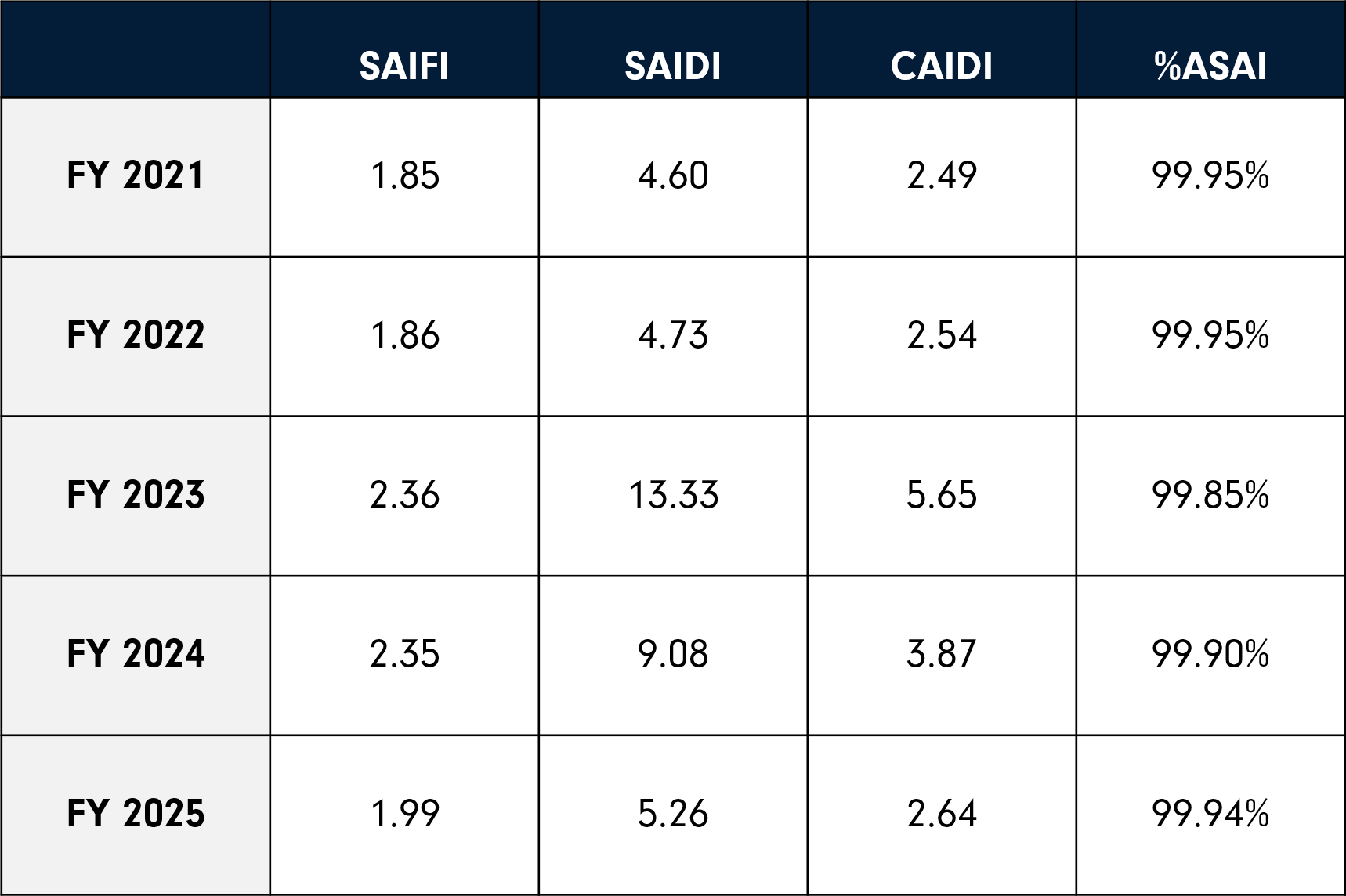
But the age of Canada’s electricity distribution infrastructure doesn't revealhow reliably it is operating. From 2021 to 2025, key measures of outage frequency, duration, restoration time, and service availability have all deteriorated (Graph 4).

Graph 4: Canada’s distribution grid reliability has deteriorated

Source: Electricity Canada
Note: The sharp deterioration in 2023 largely reflects significant weather events. SAIFI refers to the System Average Interruption Frequency Index; SAIDI to the System Average Interruption Duration Index; CAIDI to the Customer Average Interruption Duration Index; and %ASAI to the Average Service Availability Index.

Canada’s reliability challenge therefore cannot be explained by asset age alone. It reflects a combination of factors, including severe weather, localized demand growth, and how utilities monitor and manage increasingly complex distribution networks.

Many utilities lack timely visibility into how individual transformers and feeders are loaded. At the distribution level, ABB says Canada’s grid remains an area “where visibility and control have historically been limited.” The same gap extends behind the meter. A Siemens-commissioned survey of 100 North American utility decision-makers found that utilities could see, on average, only 36 percent of behind-the-meter distributed energy resources through platforms such as distributed energy resource management systems.

As household electrification accelerates, closing this visibility gap and improving utilities’ ability to manage flexible demand will be critical to advancing the National Electricity Strategy’s grid-modernization goals and strengthening reliability across local distribution networks.

Unlocking More from the Existing Grid

Expanding and modernizing Canada’s electricity system could require as much as CA$1 trillion in investment through 2050, spanning new power supply, electricity storage, and transmission and distribution infrastructure.

Those investments will be essential, but many will take years to plan, permit, and build. In the meantime, utilities must accommodate new electric loads and manage emerging constraints across the grid infrastructure already in place.

Digital monitoring, communications, and control technologies can be deployed incrementally and layered onto existing infrastructure. They do not eliminate the need for new wires and transformers, but they can help utilities use available capacity more effectively, respond to constraints sooner, and identify where physical upgrades are most urgently needed.

Discover how Corinex helps utilities improve grid visibility, manage local constraints and unlock more capacity from existing distribution infrastructure.

For Dina Morcos, vice president of marketing and sales for Electrification Distribution Solutions at ABB Canada, the immediate opportunity lies in improving how existing infrastructure is coordinated. “Intelligence is the fastest way to unlock the capacity we already have,” she says.

As the National Electricity Strategy takes shape, it provides an opportunity to embed these capabilities alongside longer-term infrastructure expansion, helping utilities manage near-term electrification pressures while larger projects are planned and built.

Conclusion

The panel upgrade in Toronto’s west end is a small sign of a broader shift. As electric vehicles, heat pumps, and other technologies become more common, household electricity demand will increasingly peak at the same time, placing greater pressure on local distribution networks.

Canada will need substantial investment in new generation, transmission, and distribution infrastructure. But physical expansion should be paired with near-term investment in monitoring, communications, and demand flexibility so utilities can identify constraints earlier, use existing capacity more effectively, and prioritize where reinforcement is most urgently needed.

Canada does not need to choose between infrastructure and intelligence. It needs both. As electrification reshapes our communities, local distribution networks must become more visible, flexible, and responsive to meet the demands of an electrified future.

Über den Autor

Colin Tang ist Senior Investment Officer bei Corinex, wo er seine umfangreiche Erfahrung im Finanzbereich nutzt, um die Anlagestrategie und Portfolioperformance des Unternehmens voranzutreiben. Mit einer nachgewiesenen Erfolgsbilanz bei der Identifizierung und Nutzung von Anlagemöglichkeiten spielt Colin eine entscheidende Rolle bei der Unterstützung der finanziellen Ziele und des Wachstums von Corinex.

Kontaktieren Sie uns, um Zugriff auf die in unserem Artikel genannten Daten und Analysen anzufordern, oder erfahren Sie, wie Corinex-Lösungen die Netzdigitalisierung ermöglichen und Netzeinschränkungen beheben.

Sprich mit uns

Entdecken Sie weitere Einblicke in die Energiebranche

Link zum Artikel

Transformatorengpässe verlangsamen den Netzausbau in den USA: Warum Kapital allein das Stromsystem nicht skalieren kann

April 28, 2026
Link zum Artikel

Spanien liegt bei der Netzreform hinter Europa zurück, da ein Stromausfall Risiken aufdeckt

September 24, 2025
Link zum Artikel

Fortschrittliche Gesetzgebung beflügelt die Energiewende in Großbritannien

April 15, 2024