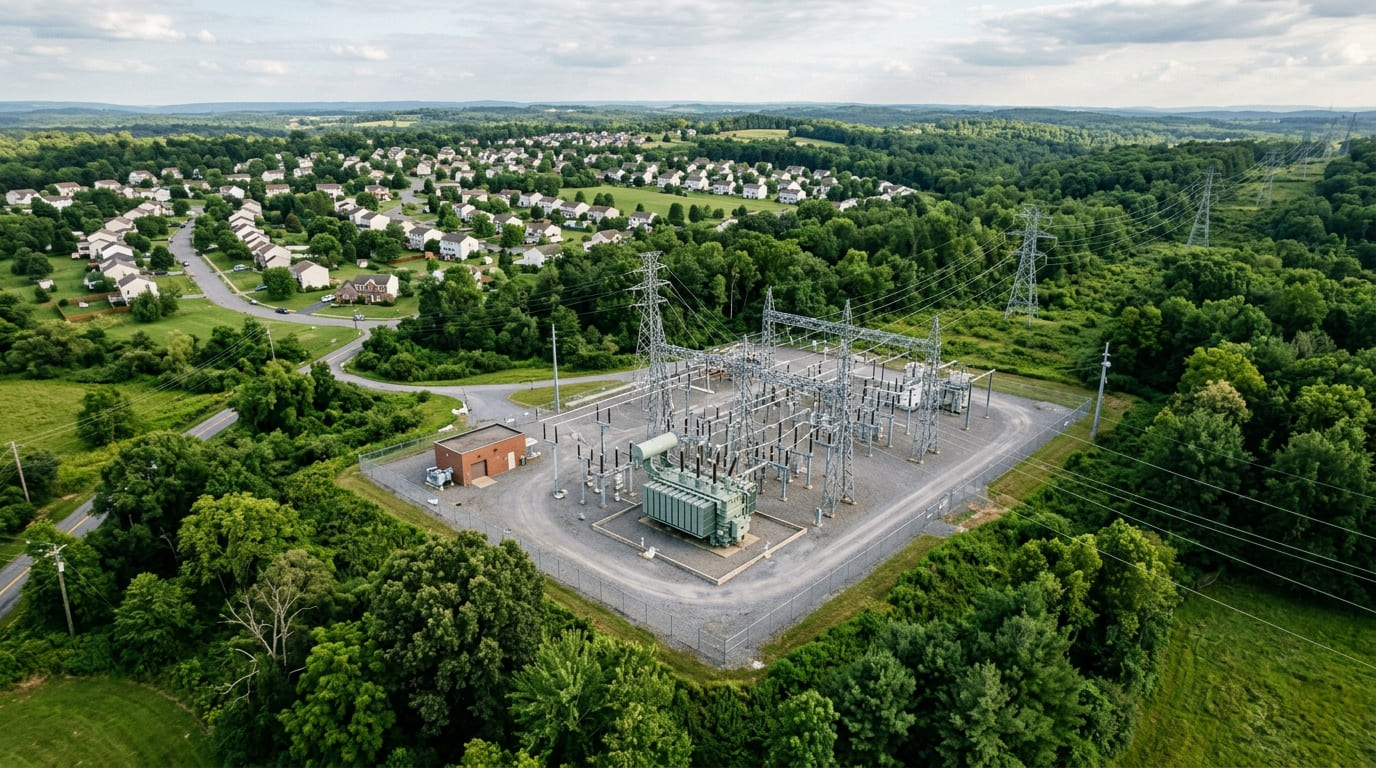
a large power transformer (LPT) in a U.S. electrical substation from a zoomed-out, elevated bird’s-eye / drone view

Transformer Shortages Are Slowing U.S. Grid Expansion: Why Capital Alone Can’t Scale the Power System

The U.S. power system is entering a historic investment cycle, but money to capital alone will not determine how fast new capacity can be built. Large power transformer shortages, aging assets, rising demand, and critical material constraints are turning equipment availability into a system-level bottleneck. As utilities face longer lead times and higher costs, improving the utilization of existing infrastructure is becoming just as important as funding new buildout.

The U.S. power system is entering one of the most capital-intensive periods in its history. Investor-owned utilities are expected to deploy more than US$1.1 trillion across grid and generation infrastructure between 2025 and 2029, nearly matching the US$1.3 trillion invested over the previous decade.

Yet the pace of expansion is no longer dictated by funding. It is increasingly constrained by the availability of critical equipment.

Large power transformers (LPTs), essential to stepping voltage across transmission and distribution networks, have emerged as a binding bottleneck. More than 90 percent of power consumed passes through a LPT at some point, making them foundational to both system reliability and incremental capacity buildout. As a result, transformer availability, not capital allocation, is becoming the limiting factor in how quickly the grid can expand.

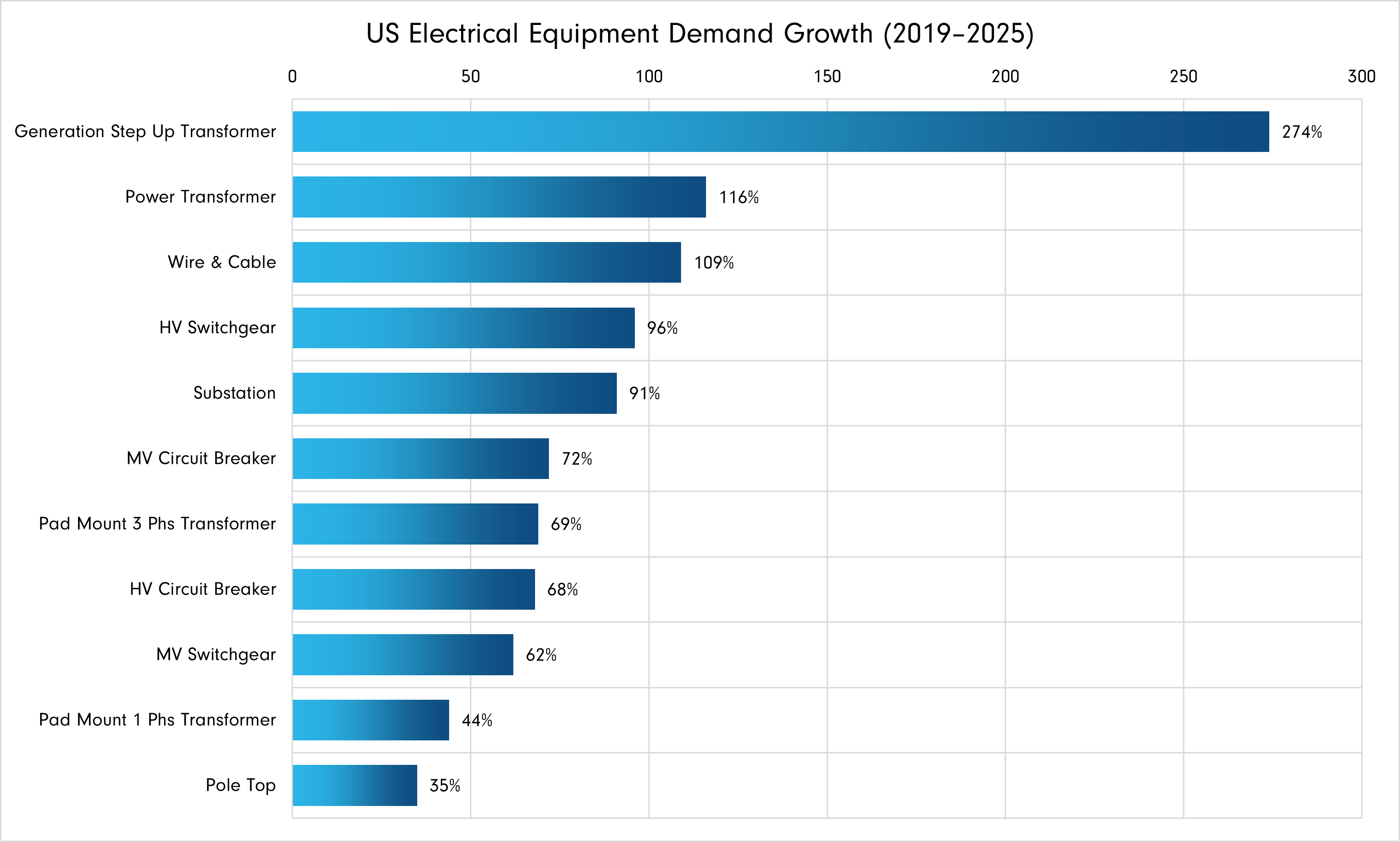
Demand for LPTs is rising simultaneously across multiple fronts (Graph 1). Nearly 2,300 gigawatts of generation and storage capacity remained in interconnection queues at the end of 2024, while the existing transformer fleet continues to age, with average asset lives approaching 40 years, near the end of their useful life. At the same time, load growth tied to data centers and artificial intelligence is accelerating, introducing a more concentrated and less predictable source of demand relative to traditional load growth.

Graph 1: U.S. grid demand drivers increasing pressure on large power transformer supply
Source: Wood Mackenzie

The supply of LPTs has not kept pace. Limited domestic manufacturing capacity, dependence on specialized inputs, and elevated costs have extended procurement timelines from months to multiple years. For utilities, this reduces flexibility to replace aging assets and delays the integration of new generation, creating a widening gap between capital deployed and infrastructure delivered.

The implication is structural: even sustained increases in capital expenditure are unlikely to translate into proportional gains in grid capacity unless transformer supply expands materially.
Why Large Power Transformer Manufacturing Cannot Scale Fast Enough  

LPTs are manufactured in low volumes through highly specialized processes. This reflects both the technical complexity of production and a history of uneven, cyclical demand that has discouraged sustained expansion of manufacturing capacity. Even where demand is clear, transformer manufacturing is difficult to scale. Production involves precision-dependent steps such as coil winding, core assembly, and extensive testing, each requiring skilled labor and long lead times. Capacity additions are therefore incremental rather than exponential, limiting how quickly supply can respond to rising demand.

Scalability is further constrained by fragmented utility specifications. Individual utilities maintain distinct technical requirements, limiting standardization and reducing opportunities for automation. The result is a “batch-of-one” manufacturing dynamic, where most units are effectively bespoke, suppressing throughput and increasing both cost and execution risk.  

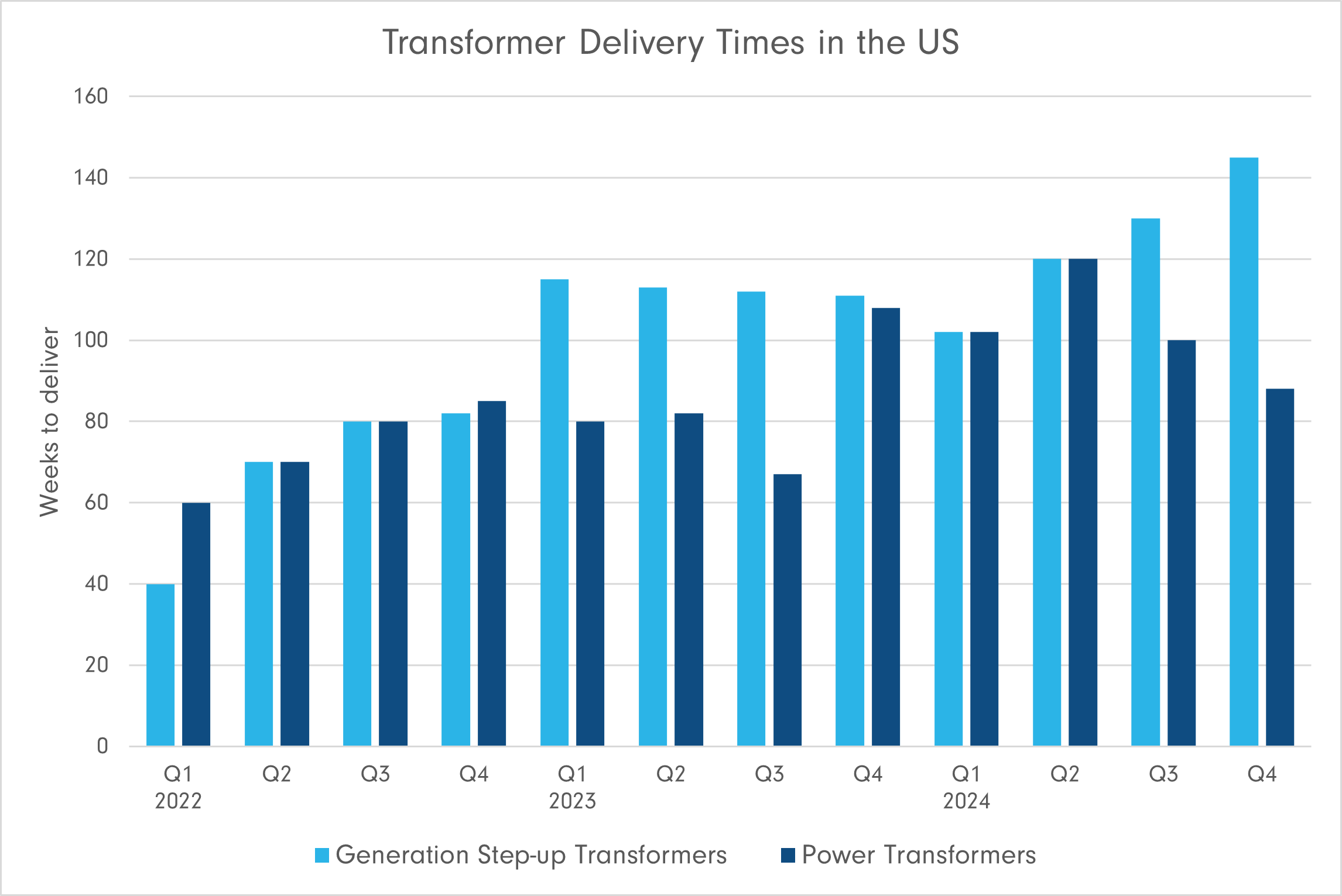
As demand accelerates, these structural inefficiencies are translating directly into persistent bottlenecks. Lead times for large power transformers now routinely extend to several years, creating a system-level constraint (Graph 2).

Graph 2: Transformer Delivery Times in the US

Transformer delivery times in the U.S. showing multi-year procurement delays

Source: Bloomberg

In theory, sustained demand should encourage capacity expansion. In practice, supply is beginning to respond, but not at a sufficient pace to close the gap. Manufacturers are investing in expanding capacity, supported by a growing backlog of orders, but additions are gradual given the capital intensity, long lead times, and execution risks associated with new facilities. Building high-voltage transformer manufacturing capacity in the U.S. is estimated to cost between $450 million and $500 million per gigavolt-ampere, significantly higher than comparable investments in Asia. At the same time, customization requirements introduce project-specific engineering risk, complicating returns and further discouraging large-scale expansion.

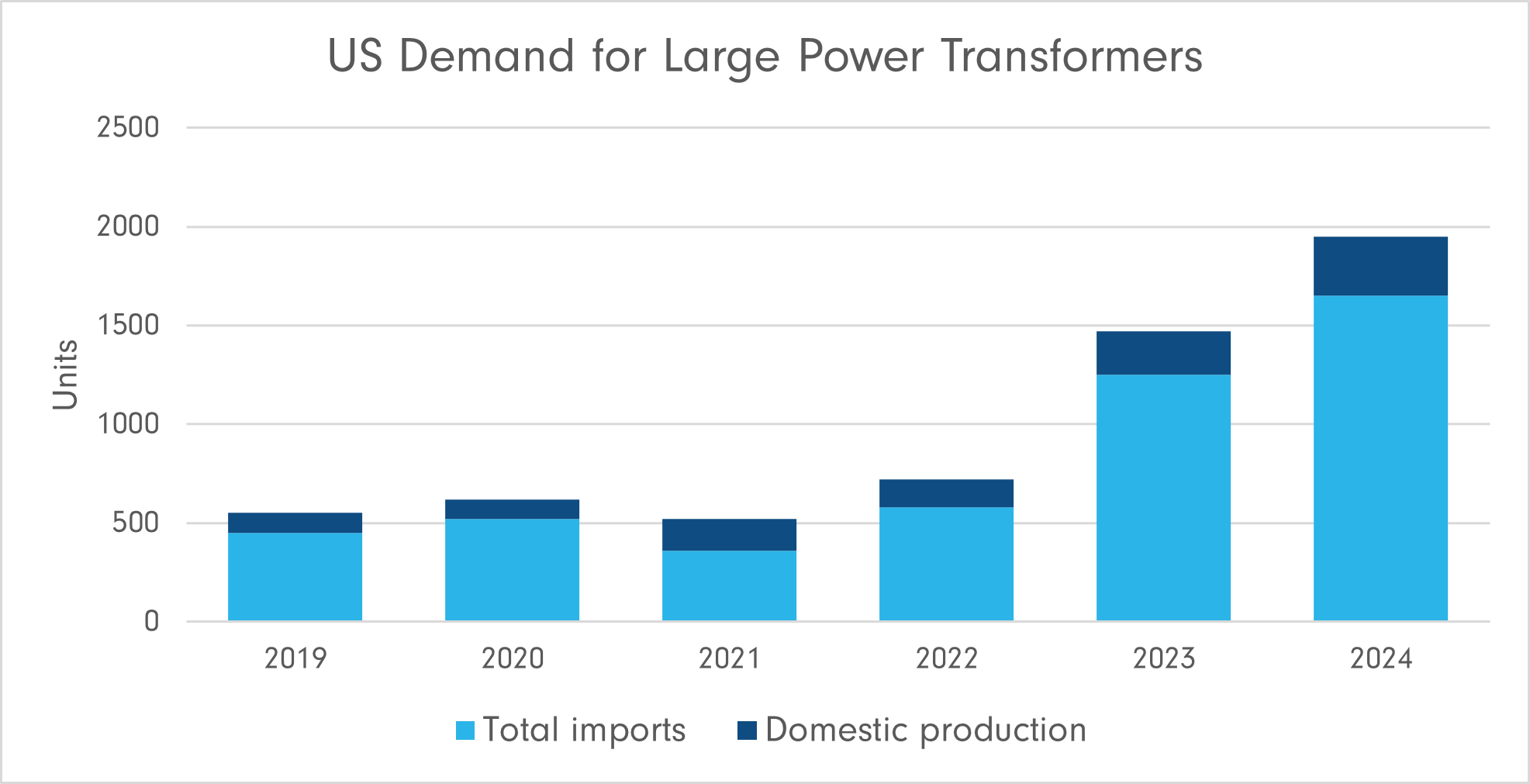
Consequently, the U.S. relies heavily on imports, which accounted for nearly 90 percent of their large power transformer demand in 2024 (Graph 3), effectively tying grid expansion to global manufacturing capacity and supply chain stability.

Graph 3: US Demand for Large Power Transformers

The U.S. has significant import dependence for LPTs

Source: Bloomberg

Recent consolidation efforts suggest the early stages of a shift toward domestic production. In February 2026, GE Vernova completed its acquisition of Prolec GE, consolidating a major North American transformer producer to strengthen supply chains and expand regional capacity. However, given long construction timelines, labor constraints, and the capital intensity of new facilities, meaningful capacity additions are likely to lag demand for several years.

Beyond manufacturing capacity, production is also constrained upstream by the availability of critical materials.

Upstream Bottlenecks and Critical Materials Dependence

The most critical input in transformer production is grain-oriented electrical steel (GOES), often described as the magnetic core of the device. Domestic production of GOES is highly concentrated, with Cleveland-Cliffs operating the only U.S. facilities capable of producing the material.

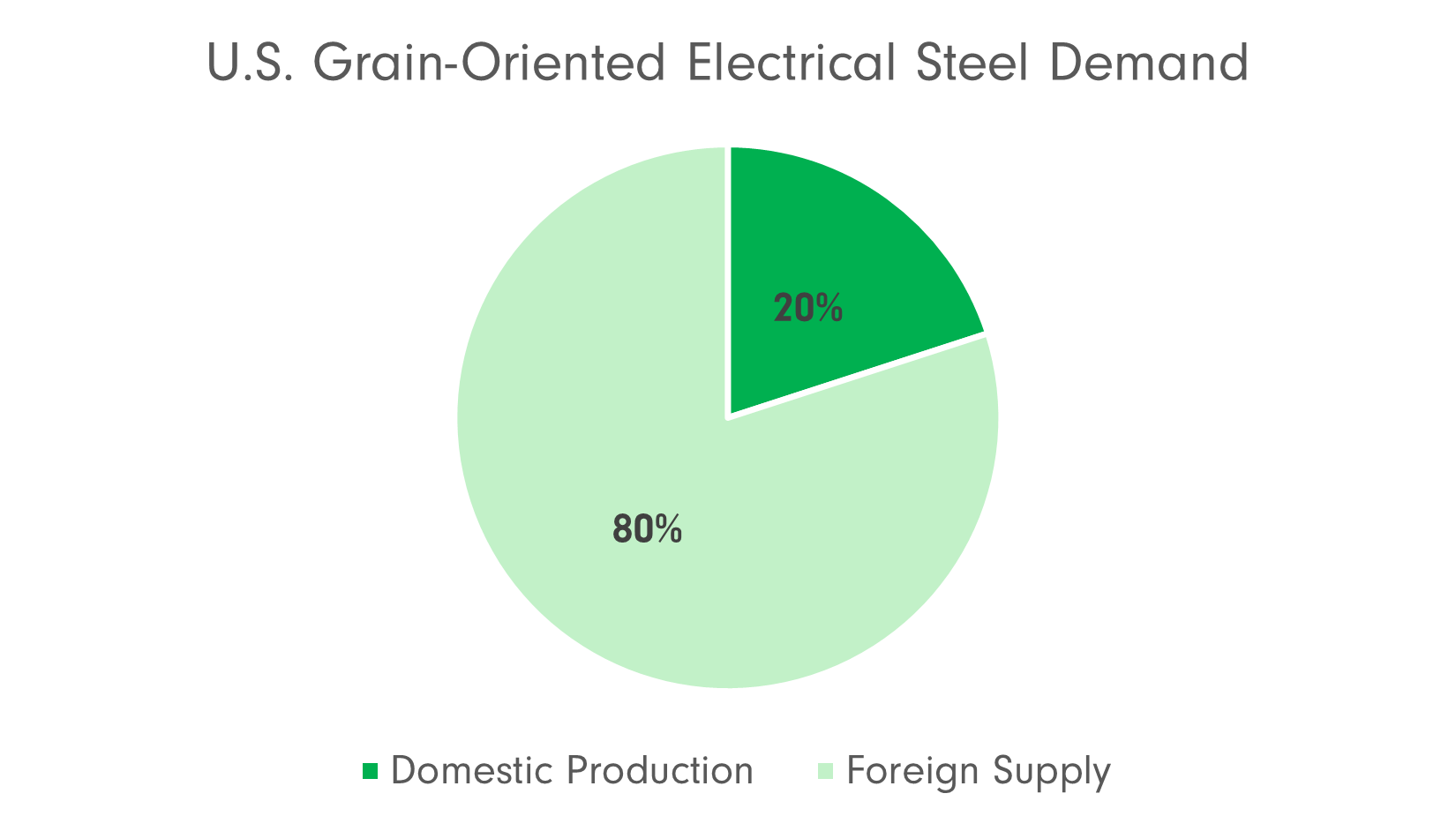
This creates a structural bottleneck upstream. Expanding transformer assembly capacity addresses only the final stage of production, while the supply of core inputs remains constrained. Domestic output currently meets roughly one fifth of GOES demand (Graph 4), leaving manufacturers dependent on imports for the majority of their needs. As the U.S. Department of Commerce has noted, “The United States has become highly dependent on foreign sources for these critical transformer components”.

Graph 4: U.S. has significant foreign dependence on grain-oriented electrical steel

Source: Corinex

This dependence introduces both supply chain fragility and geopolitical risk. While imports are often routed through North American partners, upstream production of critical materials remains concentrated among a limited number of global suppliers, particularly in Asia and parts of Europe. As a result, U.S. manufacturers remain exposed to trade policy shifts, supply disruptions, and price volatility.

Alternative materials, such as amorphous steel, offer partial substitution but do not eliminate the constraint. Domestic production is similarly concentrated, and the manufacturing process relies on imported raw materials. A large-scale shift would therefore reconfigure, rather than resolve, the underlying dependency.

This structure creates a latent geopolitical choke point that could become binding under adverse conditions. A deterioration in trade relations or the imposition of export controls could disrupt access to critical materials, further extending lead times for already constrained equipment. Given the limited substitutability of these inputs and the lack of domestic spare capacity, even a partial supply disruption would likely delay transmission projects and generation interconnections. In this context, a trade shock would not only raise costs but could directly slow the pace of grid expansion.

Small imbalances in upstream material availability can cascade into outsized delays in finished equipment, reinforcing multi-year lead times and limiting the responsiveness of the system to demand shocks.

These constraints are increasingly reflected in pricing dynamics.

How Transformer Shortages Are Reducing Grid Investment Efficiency  

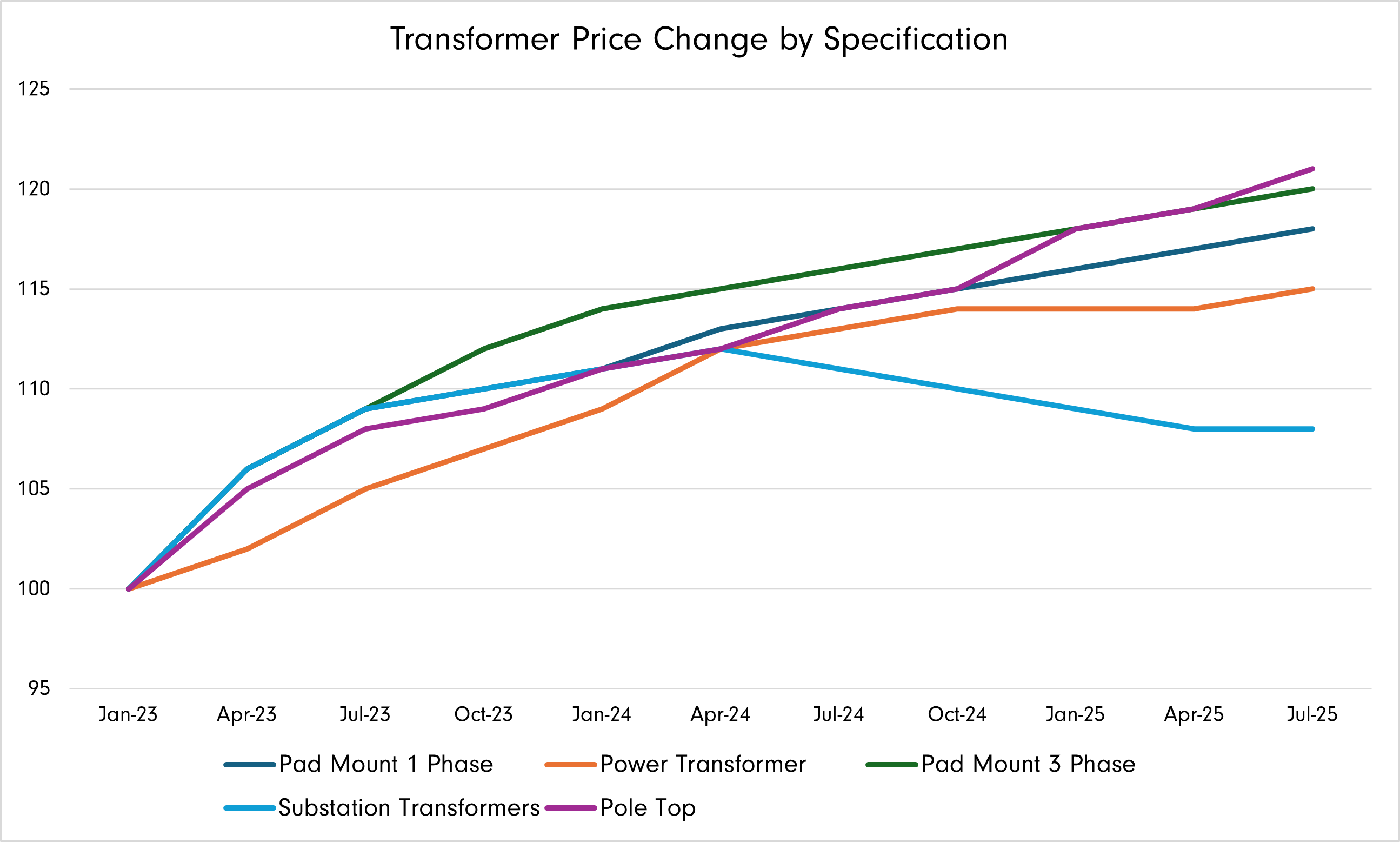
Tight supply conditions have shifted pricing power toward manufacturers. Large power transformers, already among the most expensive components of the grid, have seen material price increases in recent years, with prices rising between 8 percent and 21 percent since early 2023, depending on specification (Graph 5).

Graph 5: Tight supply has resulted in material price increases for transformers

Source: Wood Mackenzie

This introduces a second-order constraint: declining capital efficiency. As equipment costs rise, each incremental dollar of investment delivers less physical infrastructure. In effect, a growing share of grid spending is absorbed by inflation and supply constraints rather than capacity expansion.

Market data already point to a divergence between investment and outcomes, with a portion of recent increases in grid spending reflecting higher equipment costs rather than a proportional increase in deployed infrastructure.

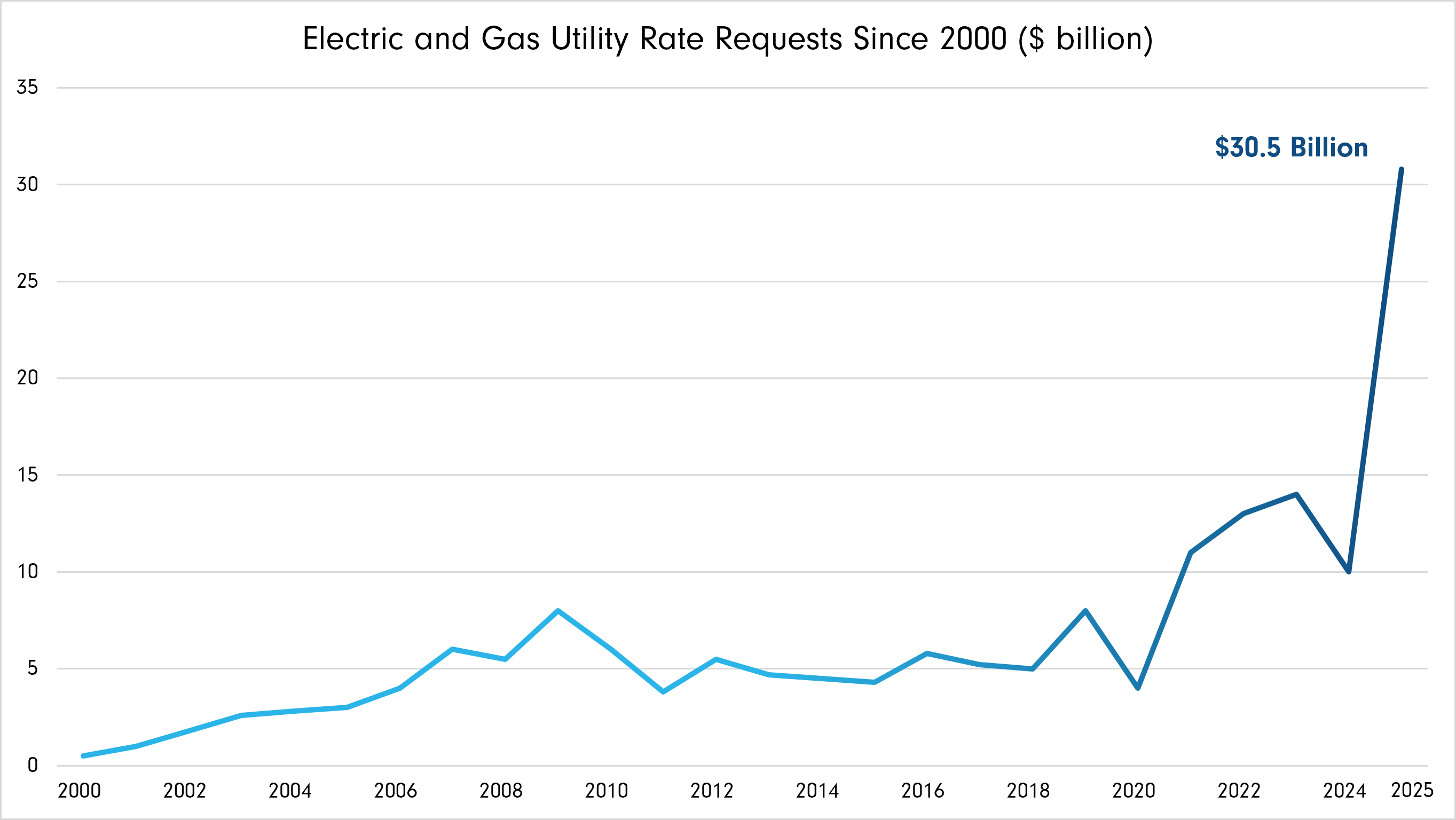
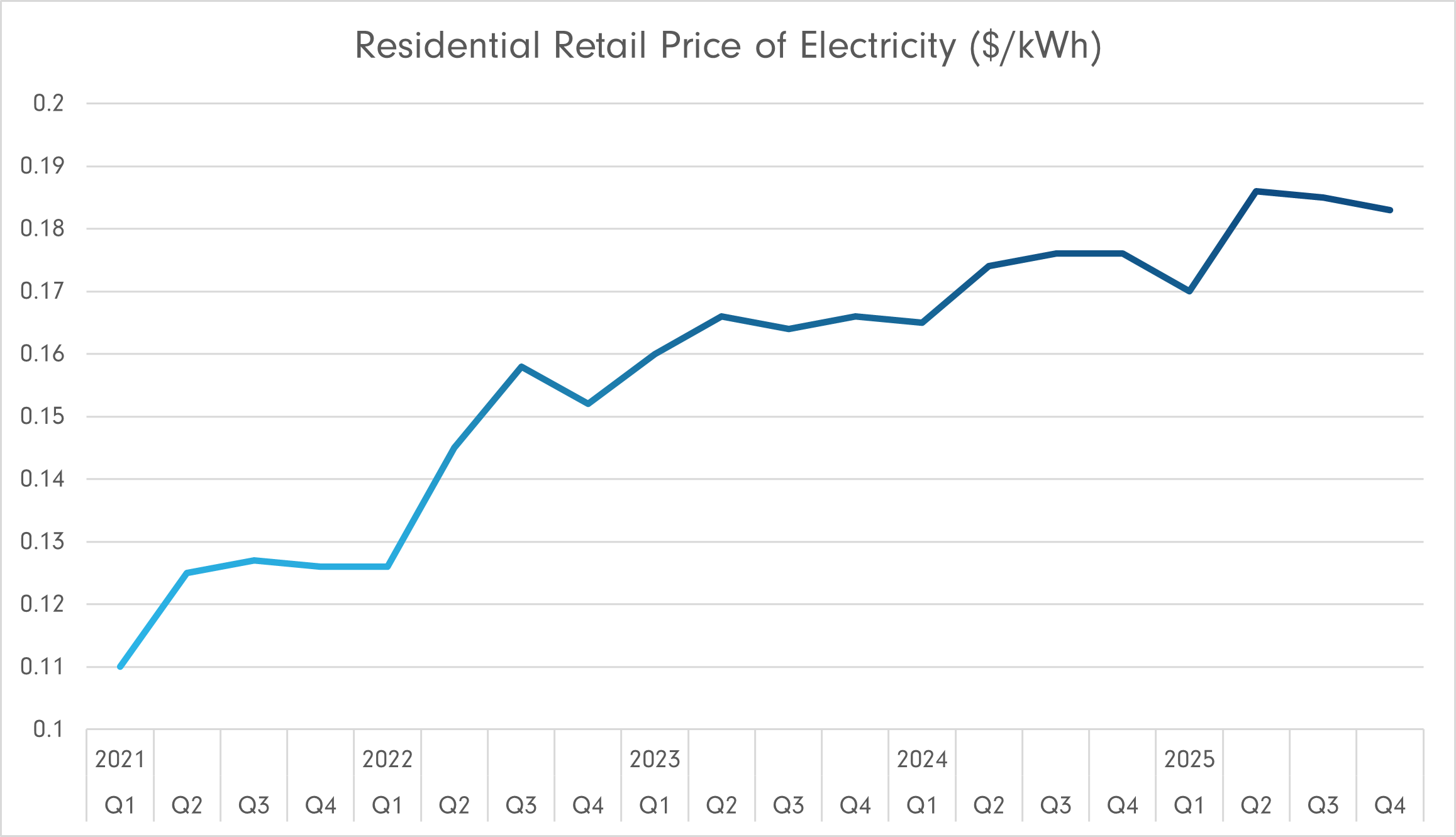
These pressures are now flowing through to consumers. Utilities are increasingly passing through higher procurement costs via rate adjustments. In 2025, U.S. utilities requested a record $31 billion in rate increases (Graph 6), more than double the prior year, while electricity prices have risen approximately 40 percent since 2021 (Graph 7).

Graph 6: Electric and Gas Utility Rate Requests Since 2000 (Billion $)

Source: Powerlines

Graph 7: Residential Retail Price of Electricity ($/kWh)

Source: Powerlines

For policymakers, this creates a tightening constraint set. Accelerating grid investment is necessary to meet load growth and decarbonization targets, but rising costs are increasing political and regulatory resistance to rate increases. At the same time, equipment scarcity is limiting how many projects utilities can advance at once, forcing others to be delayed or deferred.

How Utilities Can Improve Utilization of Existing Infrastructure While Transformer Supply Remains Constrained  

Transformer shortages highlight a key constraint for utilities: physical grid expansion cannot be the only capacity strategy. When critical equipment is scarce, improving the utilization of existing infrastructure becomes a strategic priority.

Digital grid reinforcement technologies can enhance visibility into network conditions, identify constraint hotspots, and enable more dynamic load management. This allows utilities to target physical upgrades more precisely, distinguishing between true capacity limits and underutilized assets in parts of the network, rather than treating every bottleneck as a transformer replacement or network reinforcement requirement.

Advanced Broadband over Power Lines (aBPL) offers one practical approach. By using existing power lines as a communications, sensing, and control layer, aBPL enables deeper grid visibility without requiring a separate communications overlay. This can support higher hosting capacity, more effective management of electrification-driven load growth, and more disciplined capital allocation toward areas where physical reinforcement remains necessary. While such approaches can defer some upgrades, they do not eliminate the need for new LPTs where transmission-level constraints are structural.

Conclusion

The U.S. power sector is entering a historic investment cycle, but capital is no longer the primary constraint. Large power transformer availability is now limiting replacement programs, transmission upgrades, substation expansion, and new generation interconnections.

These constraints are likely to persist through the decade unless manufacturing capacity, skilled labor, testing infrastructure, and upstream material supply expand materially. Grid expansion will depend less on how much capital is allocated and more on how quickly critical equipment can be produced, qualified, and delivered.

For investors and policymakers, this shifts the focus from funding availability to industrial capacity. In the near term, transformer supply, not capital, will define the upper bound of U.S. grid growth. Utilities will need better visibility into asset loading, constraint locations, and available headroom so scarce equipment is deployed where physical reinforcement is truly unavoidable.

About The Author

Colin Tang is the Senior Investment Officer at Corinex, where he leverages his extensive experience in finance to drive the company's investment strategy and portfolio performance. With a proven track record of identifying and capitalizing on investment opportunities, Colin plays a crucial role in supporting Corinex's financial objectives and growth.

Contact us to request access to the data and analytics mentioned in our article, or discover how Corinex solutions enable grid digitalization and address grid constraints.

Talk to us

Discover more insights on energy industry

Link to article

Closing the Infrastructure Divide for Decarbonization

March 11, 2025
Link to article

Italy's Superbonus Boosted Growth but Strained the Grid

October 15, 2024
Link to article

Progressive Legislation Energizes UK’s Energy Transformation

April 15, 2024